
Successful 'Active Science' Pilot Launched
29/07/26, 10:00
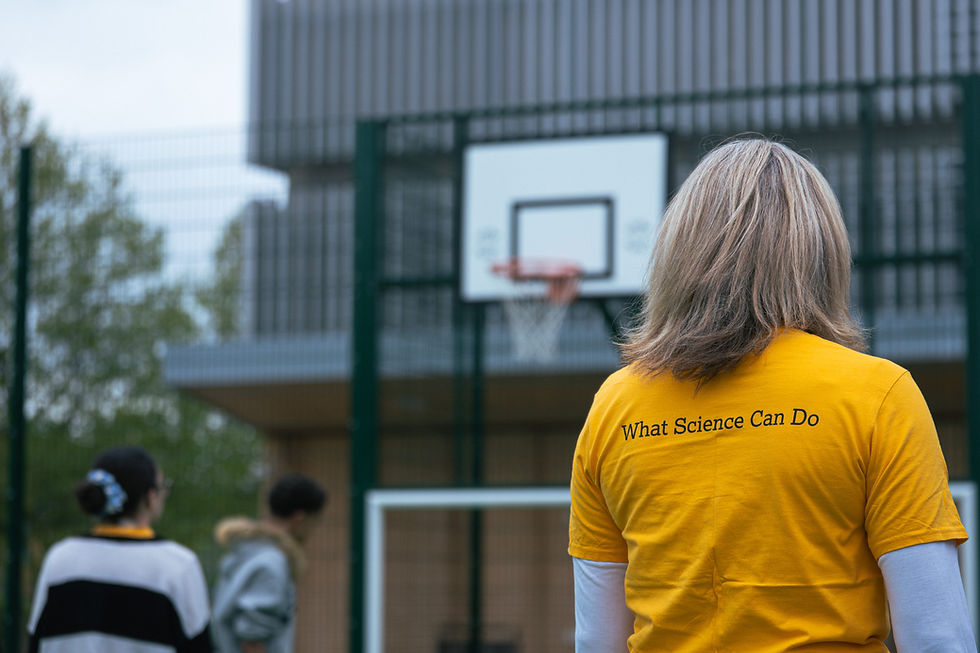
25 students from the North Cambridge Academy (NCA) were invited to AstraZeneca's Discovery Centre (The DISC) to test a new 'Active Science' pilot for secondary school students.
It marks a significant milestone in AstraZeneca and Cambridge United Foundation’s commitment to STEM education.
The day started with a variety of active science-based activities in AstraZeneca's Multi-Use Games Area (MUGA), including shooting basketballs to assess optimal performance for making shots, running with parachutes to assess wind resistance, and inflating balloons to measure lung capacity.
Following the hard work on the MUGA, students were taken to The DISC where they were given a tour of the labs to see real-life science in action.
Lisa King, Director of UK STEM and Community Engagement said: “Active Science is a dedicated programme designed to get students involved in science using the power of sport. Until now, the programme has been delivered successfully in primary schools for students aged 9–11. This pilot represents a deliberate progression into secondary education. This is the age at which students begin making career decisions, and it is precisely the moment when many disengage from science entirely. The science pipeline is often described as "leaky" - and the biggest leaks happen not at A-level or university, but during these earlier secondary school years when curiosity is lost and not recovered.
“It’s been brilliant partnering with the Cambridge United Foundation team to deliver the pilot, the learnings gained will be folded into the programme before we roll it out to other Active Science partners throughout the the UK”
Tim Walker, Head of Programmes at Cambridge United Foundation said, “Active Science addresses this challenge head-on by doing something simple: making science active, physical, and fun. By linking scientific concepts to sport and physical activity - measuring lung capacity, assessing wind resistance, calculating optimal shooting angles - the programme makes STEM tangible and memorable. It removes the idea that science is something that only happens in a textbook or behind a screen.
“Crucially, bringing students into AstraZeneca's Discovery Centre gives them exposure to real scientists doing real work. This is essential for building self-efficacy - the belief that a career in science is not only possible but accessible to someone like them. For students from backgrounds where STEM role models may be scarce, this kind of experience can be transformative.”
This pilot sits within AstraZeneca's STEM education initiatives across the UK. The company operates the STEM Inspiration Lab at the Discovery Centre in Cambridge, hosts hands-on school sessions for primary schools and maintains a large network of employee STEM Ambassadors who volunteer in local schools. AstraZeneca also partners with the Royal Institution to support their 'Science in Schools' programme, offers virtual work experience for Year 10 students, and offers on-site placements for Year 12 students.
The expansion of Active Science into secondary schools is a natural progression within this ecosystem - bridging the gap between the primary school programme and the more advanced opportunities available to older students. It ensures that the enthusiasm and curiosity sparked at age 9 or 10 is sustained and reinforced during the critical Key Stage 3 years, rather than being left to fade.
What Difference Can This Make?
The EngineeringUK's latest annual report (typically titled "Engineering UK: The State of Engineering") and any relevant House of Commons Select Committee reports on STEM education indicate the potential impact is significant. Teachers cite funding limitations (52%), curriculum pressures (44%), and time constraints (37%) as their primary barriers to delivering engaging, hands-on science. Programmes like Active Science, delivered through industry partnerships, provide exactly what schools struggle to offer on their own: practical, real-world science experiences that connect classroom learning to professional practice.
By reaching students during this critical window - before disengagement sets in - Active Science can help to build a more diverse and inclusive STEM talent pool, challenge entrenched stereotypes about who science is "for," and ultimately strengthen the pipeline of future scientists, engineers, and innovators that the UK urgently needs.
What Happens Next
The pilot will now be assessed further before delivery at other secondary schools. Thank you to AstraZeneca for their help in creating a memorable day for the NCA students - and for their continued investment in making science accessible, exciting, and real for young people across the country.
Ref: The specific figures directly with EngineeringUK's latest annual report (typically titled "Engineering UK: The State of Engineering") and any relevant House of Commons Select Committee reports on STEM education.